What is value?
Value is a multifaceted concept that encompasses anything that improves someone’s life. This improvement can be objective, such as food for survival, or subjective, like a Pokémon card triggering a nostalgic feeling. Each individual perceives the value of a given service or good differently. In a market, the average perceived value among participants, combined with the dynamics of supply and demand, determines the price of goods and services.
What is a money manager’s Raison d’être ?
When value creation exceeds value consumption, a surplus arises, often manifesting as excess money. To make good use of this surplus, it must be managed correctly. This is where a money manager can create value: by managing a client’s money more efficiently than the client is capable of.
So do they actually create value?
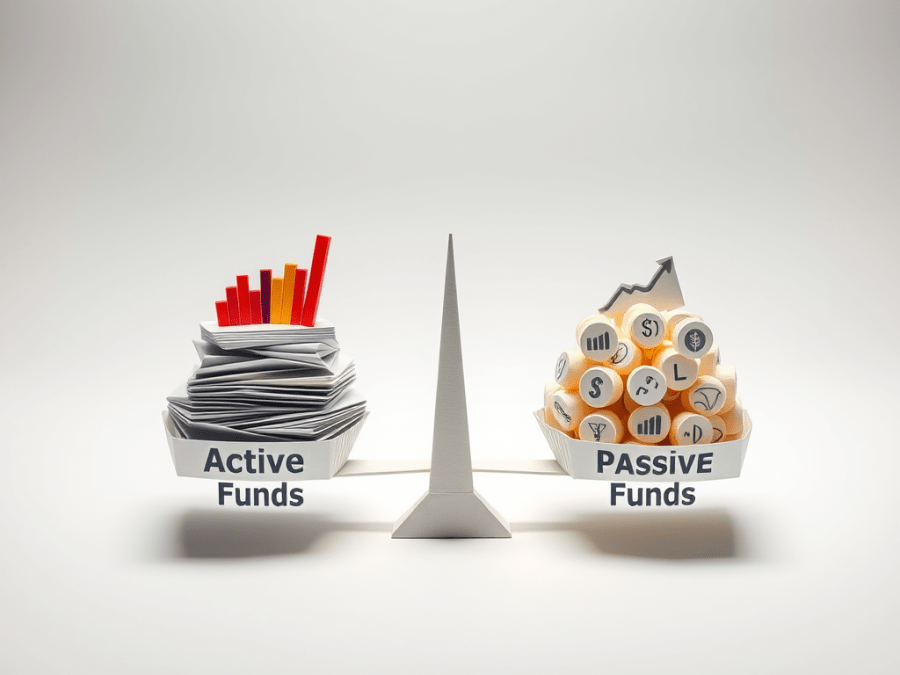
Let’s compare apples with apples and weigh the alternatives. You don’t need a money manager to store your money in a bank account. An alternative would be to buy a passively managed index fund. These funds track an index, like the MSCI World Index or the S&P 500, containing a broad variety of equities. Index funds are easy to buy and available at a fraction of the cost of actively managed funds, which are run by fund managers.
Given this, we can conclude that for a money manager to create value, the actively managed fund must perform better than the index. The additional costs of active management must be justified by higher returns, better risk management, or other benefits that outweigh the lower costs and broad diversification offered by passive index funds.
The ugly truth is that approximately 90% of actively managed funds do not beat the index, even before accounting for fees. To illustrate this, Warren Buffett made a million-dollar bet that a simple index fund would outperform a collection of actively managed hedge funds over a ten-year period. After eight years, the hedge funds were so far behind that it was nearly impossible for them to catch up. This bet highlights the difficulty active fund managers face in consistently outperforming the market.
Following this chain of logic, most money managers don’t create value and should therefore have no right to exist. So why do they exist?
Marketing likely plays a significant role in this dynamic. Many investors are drawn to funds that perform well in the short term, such as Cathie Wood’s ARK Invest, only to see these funds fail to beat the index over the long term. There are various reasons for this, but a major factor is the average investor’s lack of knowledge or concern about long-term performance.
Additionally, a substantial portion of capital is tied up in pension funds. These funds are often constrained by legislation, which can force them into suboptimal investment decisions, such as buying government bonds with negative interest rates. Such investments are virtually guaranteed to erode wealth over time.
To summarize, the combination of savvy marketing, short-term performance allure, and regulatory constraints on large institutional investors contributes to the prevalence of actively managed funds, despite their generally poor long-term performance compared to passive index funds.
How to solve this problem?
I believe a more long-term oriented focus for the entire industry is paramount. Money managers who truly create value often share common characteristics: they exhibit a calm temperament, make rational decisions, and maintain a steadfast long-term focus. These qualities enable them to navigate market volatility, avoid impulsive decisions, and prioritize sustainable growth over time. By fostering these traits, the industry can better serve investors’ long-term financial goals and create more consistent value.
From an ethical perspective, one of the biggest problems arises when pension funds are invested with active managers who under perform the index but still receive generous compensation. These managers are essentially extracting value from a capital pool created by the labor of others.
In a perfect world, the responsibility for capital allocation should indeed rest with the owners of the capital. Each individual should take responsibility for deciding whether to invest in an index fund or choose a money manager who can demonstrably create value. This approach promotes greater accountability and encourages investors to educate themselves.
 Roman Esseveld